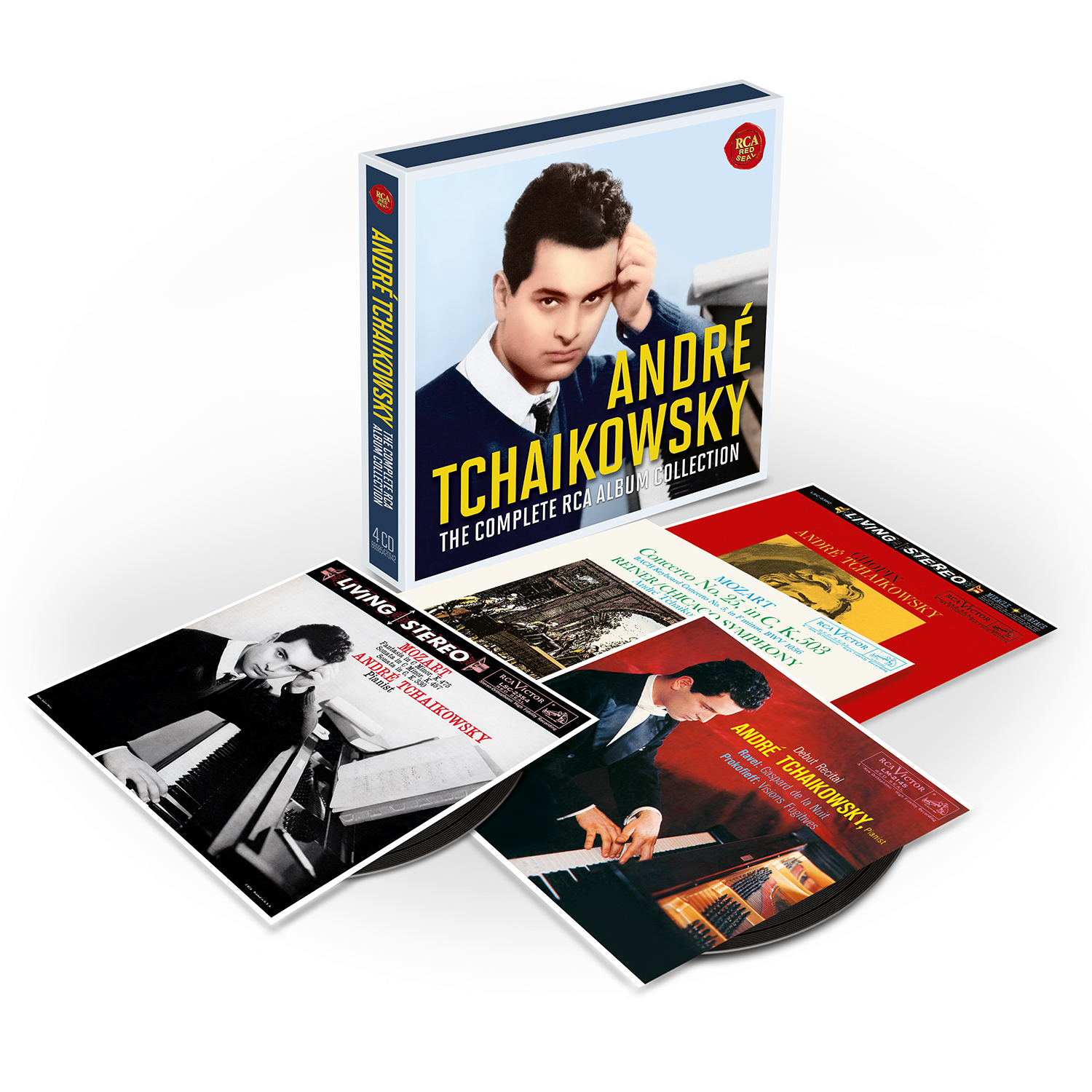
|
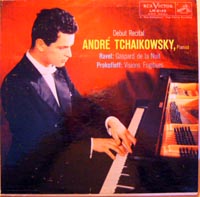
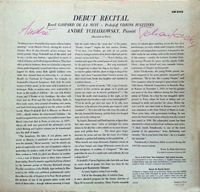
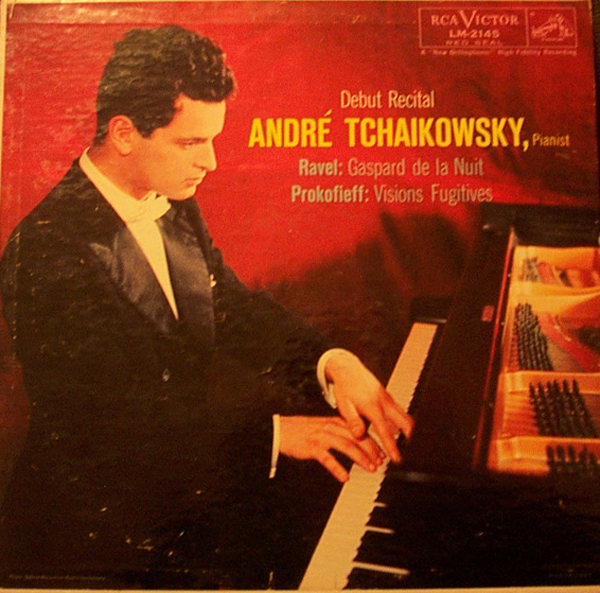
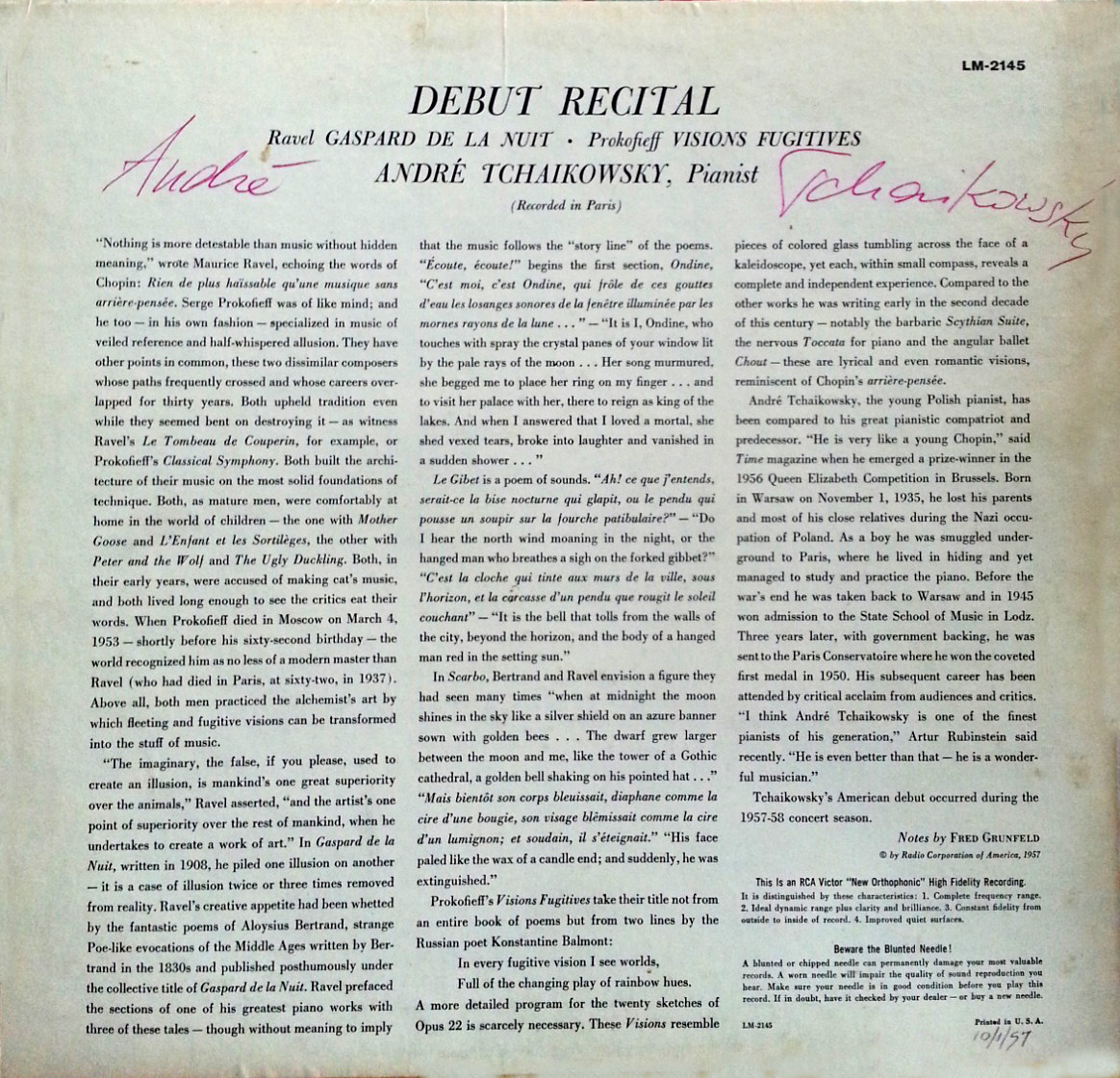
RCA Victor Cover Art
(back cover is autographed)
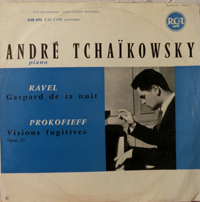
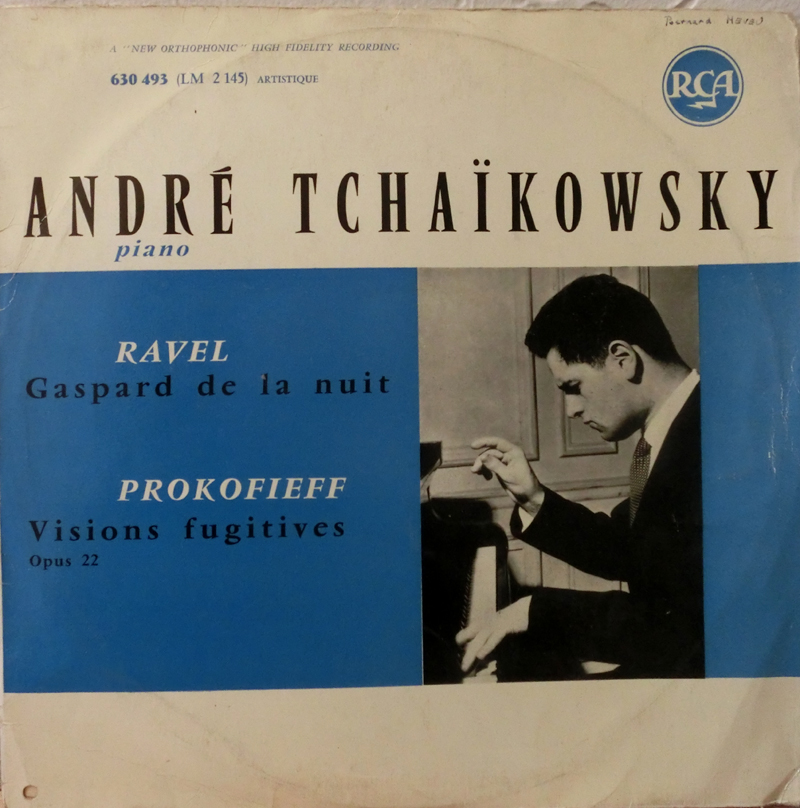
RCA/Artistique Cover Art
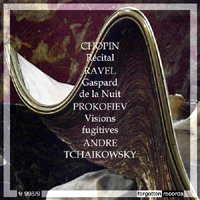
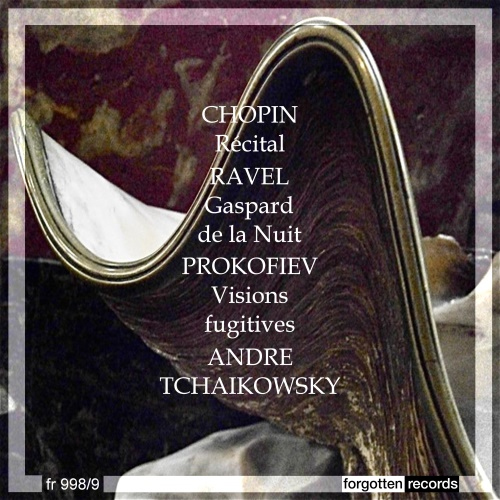
Forgotten Records fr-999
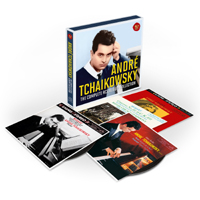
RCA/Sony
Classical Box Set
Sony 88985470142 (CD1)
|
RCA
Victor LSC-2145 (Stereo - possibly never released in stereo)
RCA Victor
LM-2145 (Mono) (US)
RCA Victor RB-16046 (Mono) (UK)
Artistique 630 493 (Mono) (France)
Forgotten Records fr-999 (CD) (Click
Here for purchase information)
RCA/Sony Classical 88985470142 (CD box set, CD1)
Ravel - Gaspard de la Nuit
Prokofiev - Visions Fugitive
Music
/ MP3
Ravel - Gaspard de la Nuit
0. Complete
/ 00_gaspard_de_la_nuit_complete.mp3
1. Ondine / 01_gaspard_de_la_nuit_ondine.mp3
2. Le Gibet / 02_gaspard_de_la_nuit_le_gibet.mp3
3. Scarbo / 03_gaspard_de_la_nuit_scarbo.mp3
Prokofiev
- Visions Fugitives
0. Complete
/ 00_visions_fugitive_complete.mp3
1. Lentamente / 01_visions_fugitives_lentamente.mp3
2. Andante / 02_visions_fugitives_andante.mp3
3. Allegretto / 03_visions_fugitives_allegretto.mp3
4. Animato / 04_visions_fugitives_animato.mp3
5. Molto Giocoso / 05_visions_fugitives_molto_giocoso.mp3
6. Con Eleganza / 06_visions_fugitives_con_eleganza.mp3
7. Pittoresco / 07_visions_fugitives_pittoresco.mp3
8. Commodo / 08_visions_fugitives_commodo.mp3
9. Allegro Tranquillo / 09_visions_fugitives_allegro_tranquillo.mp3
10. Ridicolosamente / 10_visions_fugitives_ridicolosamente.mp3
11. Con Vivacita / 11_visions_fugitives_con_vivacita.mp3
12. Assai Moderato / 12_visions_fugitives_assai_moderato.mp3
13. Allegretto / 13_visions_fugitives_allegretto.mp3
14. Feroce / 14_visions_fugitives_feroce.mp3
15. Inquieto / 15_visions_fugitives_inquieto.mp3
16. Dolente / 16_visions_fugitives_dolente.mp3
17. Poetico / 17_visions_fugitives_poetico.mp3
18. Con Una Dolce Lentezza / 18_visions_fugitives_dolce_lentezza.mp3
19. Presto Agitaissimo / 19_visions_fugitives_presto_agitaissimo.mp3
20. Lento Irrealmente / 20_visions_fugitives_lento_irrealmente.mp3
Review
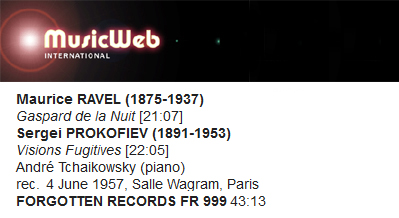
on MusicWeb International Website (October 2014)
A review of the CD reissue of this record by Forgotten
Records (fr-999)
appeared on the MusicWeb
International website on October 9, 2014. Written by Stephen Greenbank,
this review includes: "Tchaikowsky summons up all of his resources
to deliver a performance of epic proportions. He gets to the very heart
of each of the three pieces of this triptych. Ondine is mischievous
and seductive. In Le Gibet he evokes an atmosphere of menace and suspense.
There a real feeling of portent about the whole thing. Scarbo has energy,
drive and vigour, all achieved with superb technical command."
Read
More.
Review
from High Fidelity magazine (December 1957)
André Tchaikowsky, who made his American debut with the New York
Philharmonic last October, comes to this country as first medalist of
the Paris Conservatoire (1950), a prizewinner in the 1956 Queen Elisabeth
Competition in Brussels, and bearer of the seal of approval of Artur
Rubinstein ("He is a wonderful musician"). Tchaikowsky is
a Polish-born boy who escaped to Paris during the war, returned to Warsaw
in 1945 [editor: this is not true - André never left Poland during
the war], and has recently started his concert career. This recording
was made in Paris. I am not too happy with it, and could name a good
dozen pianists in America alone who could do better work. On the basis
of this disc, Tchaikowsky impresses me as a thumper who has a good way
to go before he can assume the responsibilities of real artistry.
His is
a muscular, hard style of playing that lacks repose; and while he seems
to have a respectable technique, it is not really on a big order. In
the Ravel cycle of three pieces, he plays Ondine as though it were bard
water and fissionable. It would be cruel to compare his performance
with Gieseking's; and yet a record is a permanent document that invites
comparison of this sort. Tchaikowsky does not begin to show an equivalent
feeling for color and nuance. He captures little of the mood of Le Gibet,
and in the concluding Scarbo he blithely ignores most of Ravel's carefully
written dynamic indications. An especially glaring instance concerns
the long trill on C in the bass, about three-quarters through the work,
where Ravel has written a triple pianissimo, which Tchaikowsky simply
bangs out.

Recording
Date(s):
June
4, 1957
Recording
Location:
Paris,
France (Salle Wagram)
Release
Date:
October,
1957
Known
Details:
André
performed the Ravel work during his prize-winning playing at the 1956
Queen Elizabeth Piano Competition, where he received 3rd prize. This
was the famous ABC competition where the prize winners were Vladimir
Ashkenazy (Russia), John Browning (USA), and Andrzej Czajkowski (Poland)
[soon after, Westernized to André Tchaikowsky]. After playing
the Ravel at the competition, music critic Jacques Stehman reported:
"Andrzej
Czajkowski, Polish, 20 years old, owns a considerable talent for this
age, as a pianist and as a musician. As in the first elimination,
his playing can be, at the wrong time, abrupt and brutish, but he
is still a gifted performer understanding with deep awareness the
pieces he plays, and making a glowing, natural, and suggestive interpretation.
He remains a convincing performer. Ravel's "Scarbo," despite
some confused and awkward passages, showed he knew how to interpret
the heat, the colors, and the sarcastic spirit wanted by Ravel. One
cannot be perfect and Mr. Czajkowski doesn't entirely have his playing
under control, but he has eloquence, vitality, and sure musical instinct."
It was
critical for RCA to have this recording ready for the market in October,
1957 to coincide with André's debut concert in New York City,
thus, RCA came to Paris to record André in June of 1957. André's
cousin, Charles Fortier, remembers:
"André
made a recording for RCA in Paris during 1957. This was a piano recital
recording. RCA rented the Salle Wagram for a recording on a Sunday
[June 2nd]. The piano was tuned, the technicians were ready, and everything
was set for the recording. Sunday came, and no André. He skipped
the recording session and went swimming. He called them that he was
sick. Monday, the same thing happened and André didn't show
up. On Tuesday morning, RCA sent a doctor to Mala's apartment [where
André was living - Mala was the sister of André grandmother
Celina, and Mala is Charles Fortier's mother] to see how sick André
was. With this development, André felt much better and made
the recording that afternoon.
"There
were many problems during the recording session as André would
start to play, but then they would have to stop him and adjust the
microphones. They kept asking him to start over. This annoyed André
greatly because they made it seem like he was supposed to be able
to be creative under such conditions. The recording didn't go well,
and it bothered André that they were going to edit all the
tapes to make a single good recording. But the RCA producer [Peter
Dellheim] was patient with André and should be given a lot
of credit that the recording was even made."
This recording
was released in October, 1957, and reviewed by a number of publications,
including the American magazine, the Saturday Review.
As the
citation of the repertory will suggest, there is more to be learned
from this disk about the fingers than the heart of the young pianist
whose American debut occurs concurrently with the release of his first
recording. Particularly, insofar as "Gaspard de la Nuit"
is concerned, the fingers have to be capable of delicacy as well as
incisiveness, finesse as well as force. It is the revelation of this
excellent recording from France that a pianist of major power has
come to join the ranks of those who really count.
I wouldn't
say that Tchaikowsky gets as much out of "Le Gibet" as this
mystical, moody piece contains, but if he did, now, what would be
the challenge for the future? He demonstrates, however, every latent
capacity for matching that challenge in the future. As for the "Visions
Fugitives," they are articulated within a whisper of their sharp-edged
contours, and with a certain driving intensity of style not unlike
that of Horowitz himself. Certainly, this "Scarbo" shows
that he is no cautious precisionist, but a really daring young man
on the pianistic trapeze.
In a letter
to a friend in Poland, André wrote:
"I'm
going to send to you my first record, Ravel's 'Gaspard de le Nuit'
and Profofiev's 'Visions Fusitives.' The record is only passable,
but there's a rather good photograph of me on the cover. My 'Le Gibet'
and 'Scarbo' were very good; only 'Ondine' seems somewhat old, wrinkled,
chaste and boring. She lacks femininity. Such an 'Ondine' amounts
to a confession on my part." [Ondine is a German mythological
water nymph who caused a mortal to fall tragically in love with her.]
Later
that year, in December, 1957, André recorded Bach's "Goldberg
Variations" for RCA but it was never released. A hint of the recording
difficulties show up on the master tape: 87 individual takes. André
eventually recorded in 1964 the Goldberg
Variations for Columbia Records.
|