|
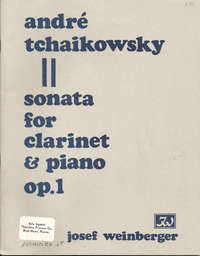
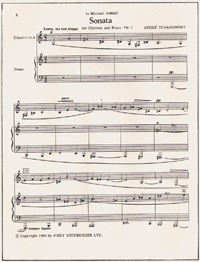
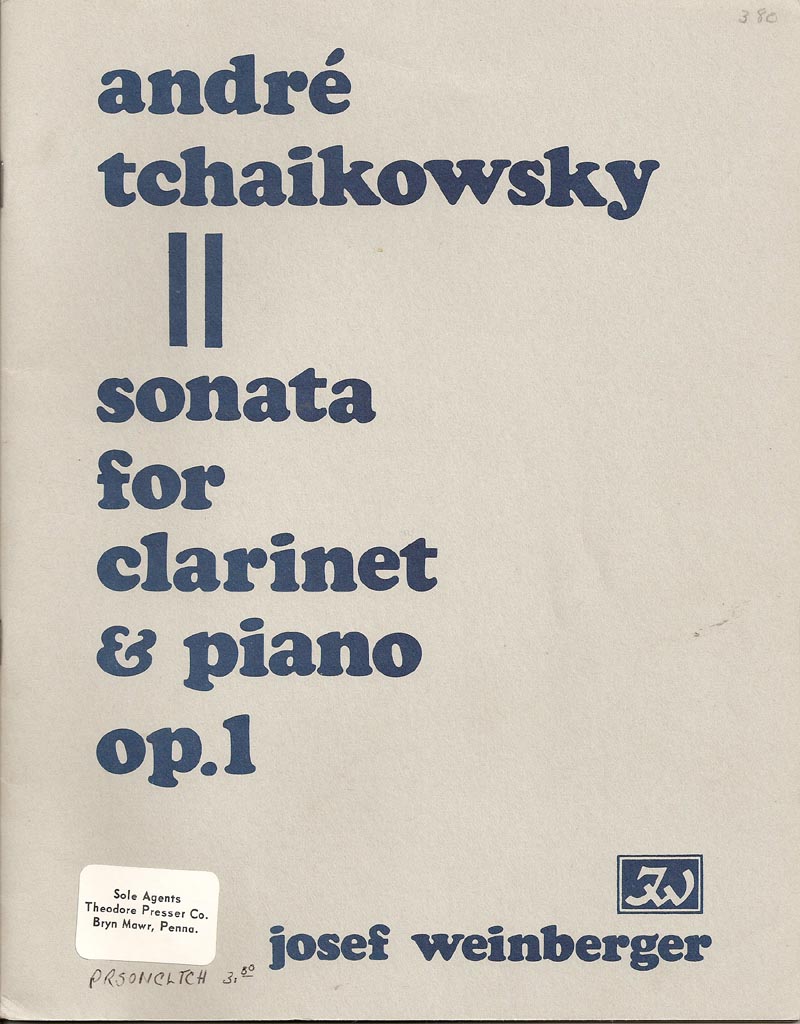
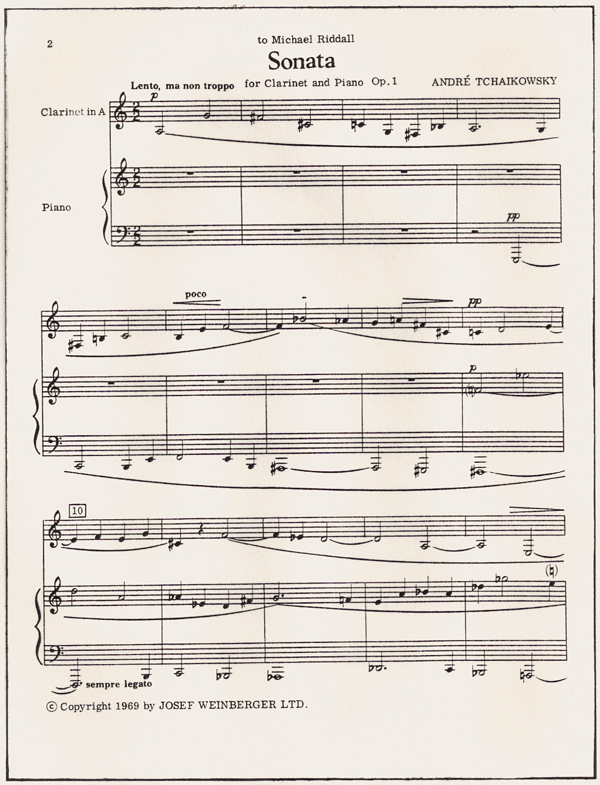
Sonata Cover/First Page
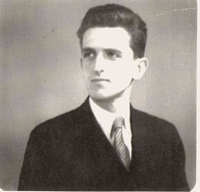
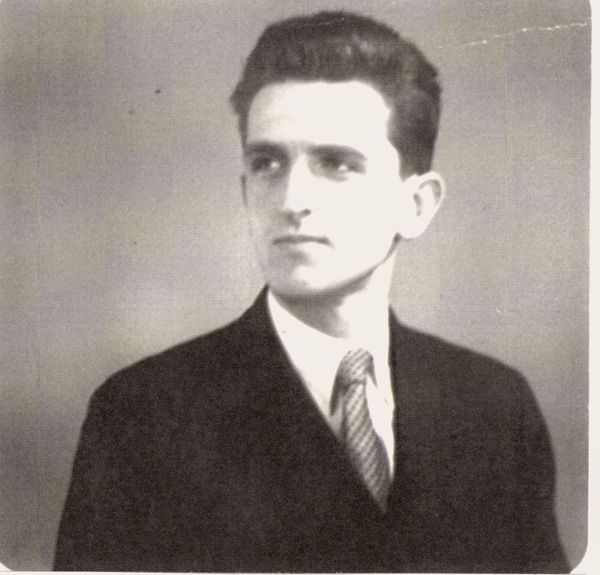
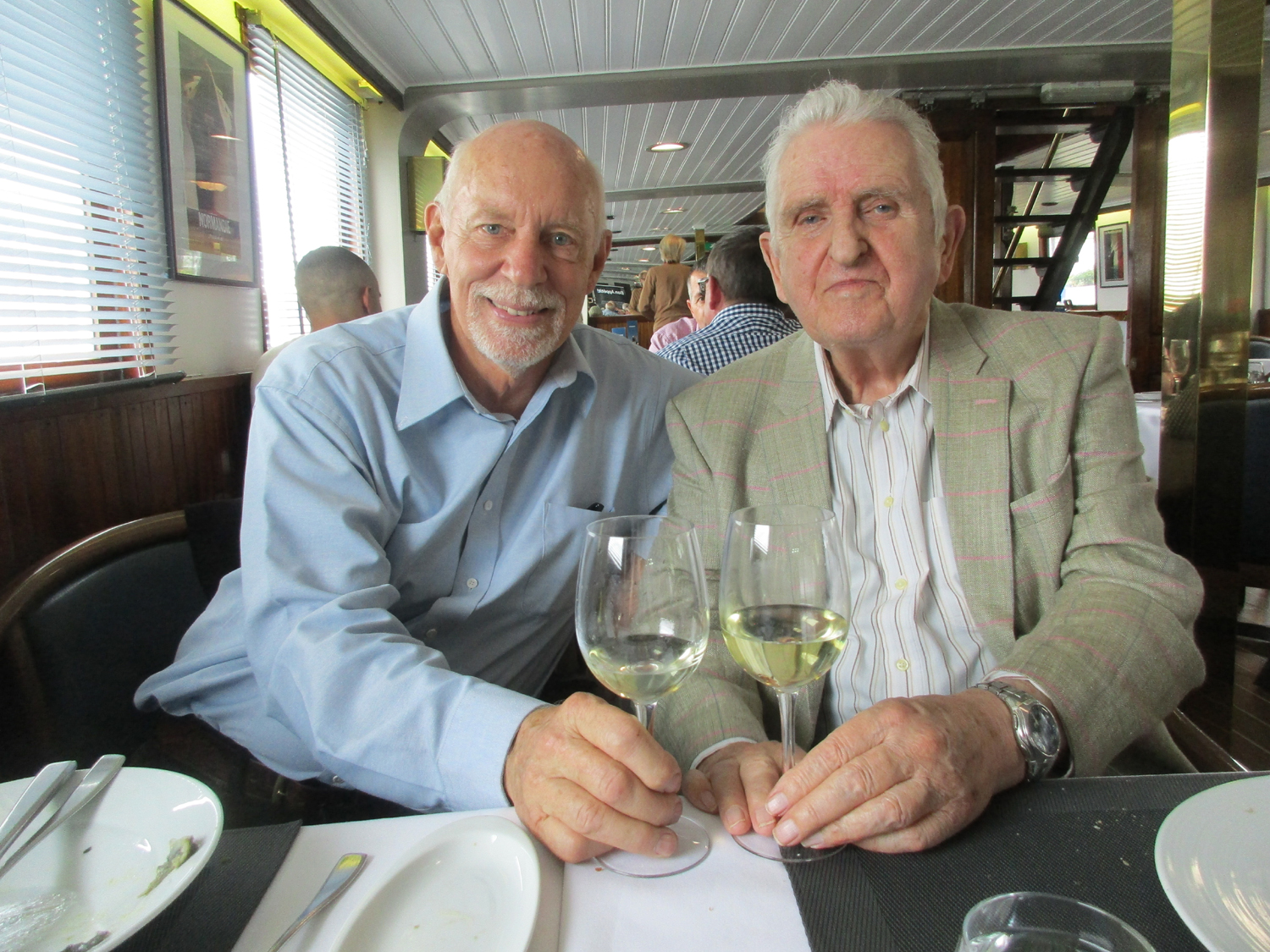
Michael Riddall (Dedicatee)
(1960)
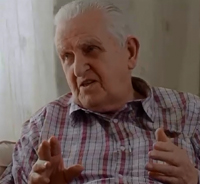
Michael
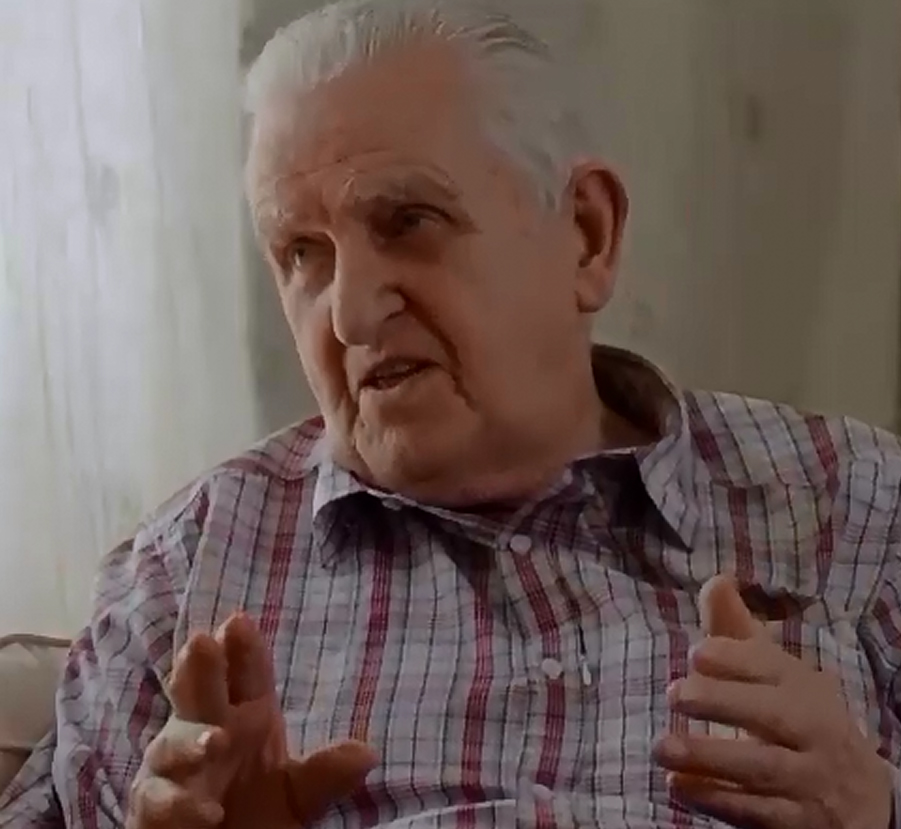
Riddall (Dedicatee)
(2013)
Brief
Video on YouTube
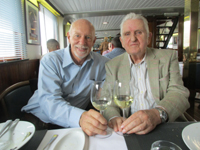 David
Ferré (webmaster) and Michael Riddall (2017) David
Ferré (webmaster) and Michael Riddall (2017)
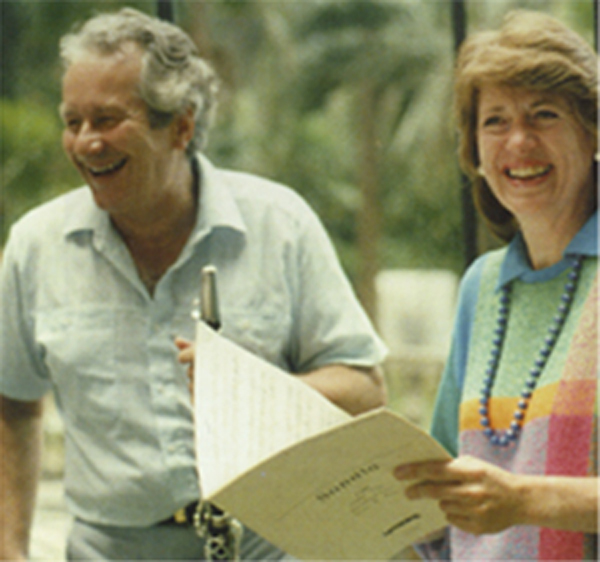
Gervase DePeyer and
Gwenneth Pryor
(Clarinet and Piano)
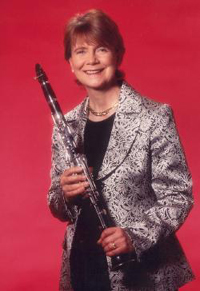
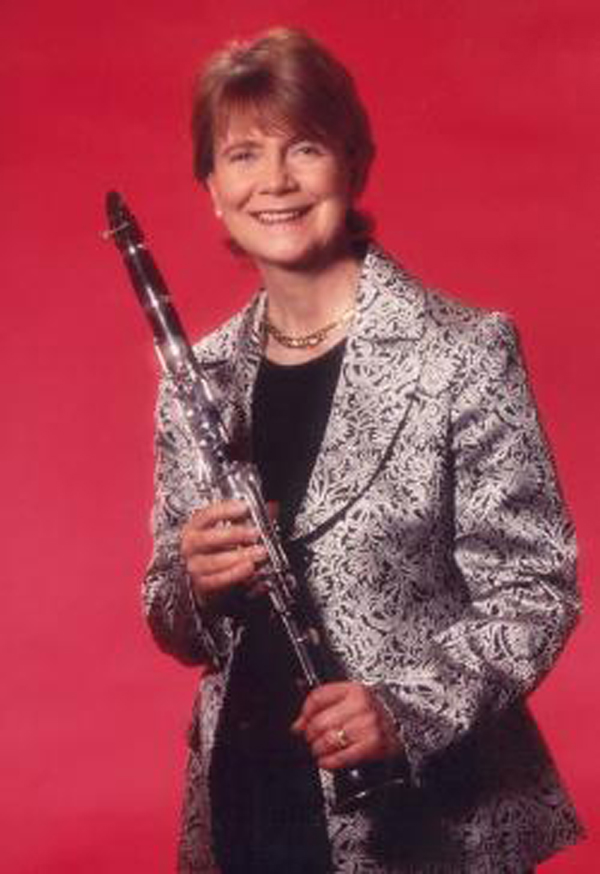
Janet Hilton (Clarinet)
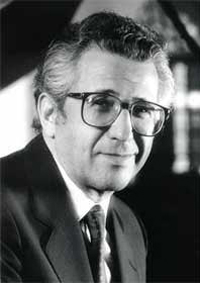
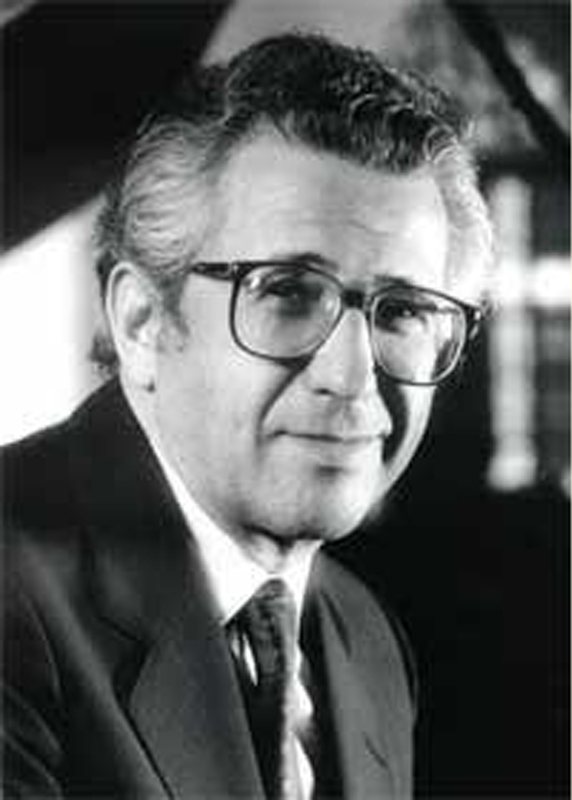
Peter Frankl (Piano)
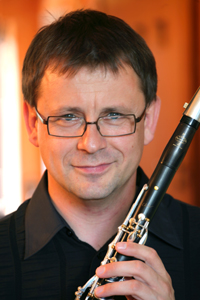
Krzysztof
Zbijowski (Clarinet)
Maciej Grzybowski
(Piano)
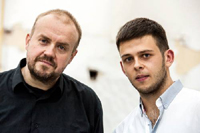
Maciej Grzybowski (Piano) and
Julian Paprocki (Clarinet)
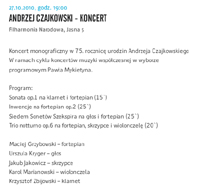 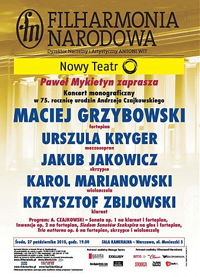
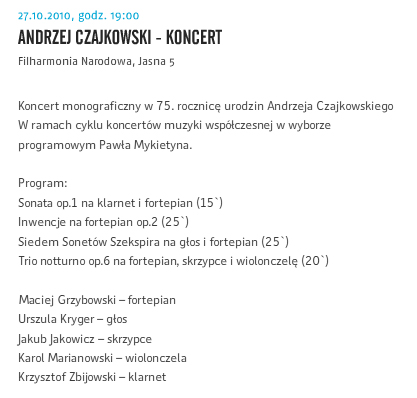
October
27, 2010
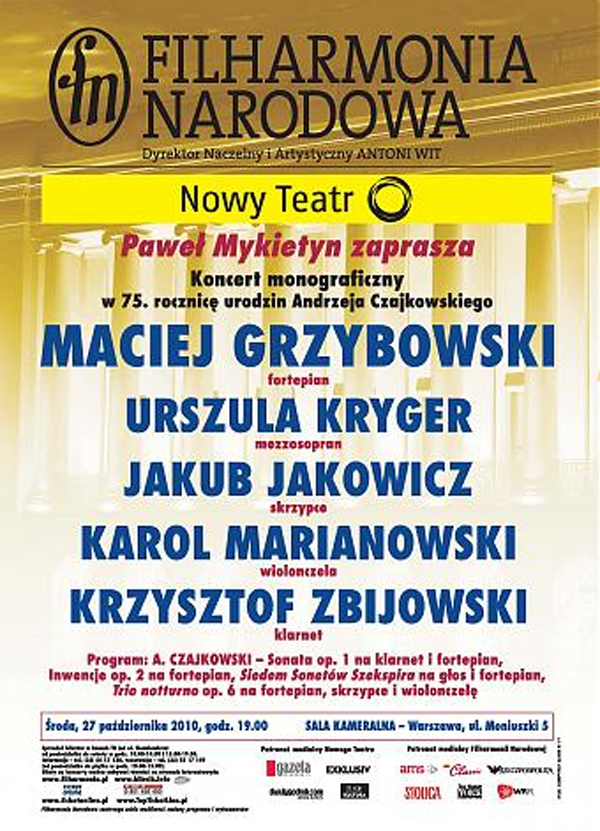
Performance in Warsaw
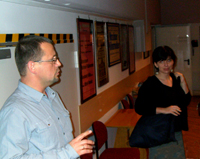
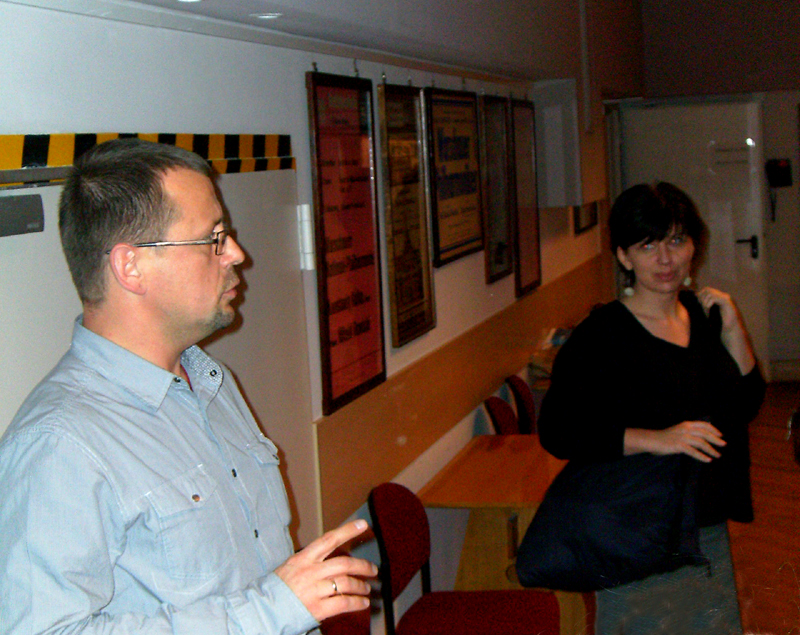
Krzysztof
Zbijowski in conversation after the October 27, 2010 performance
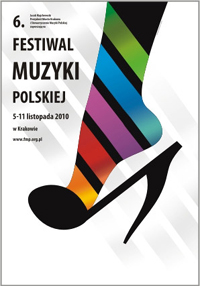
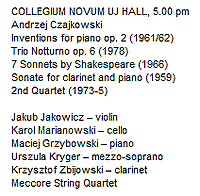 
6th Krakow Festival
of Polish Music, November 6, 2010
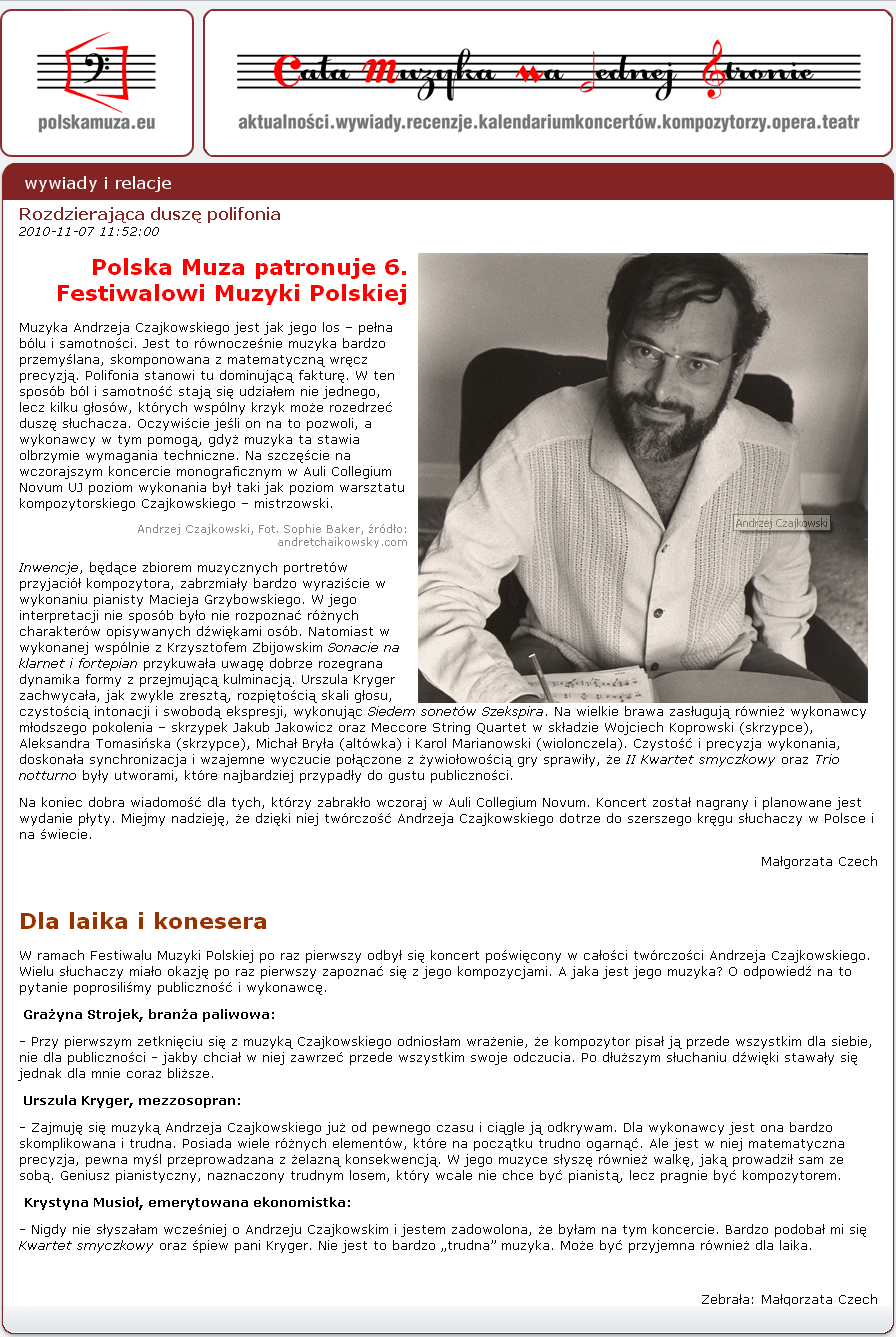
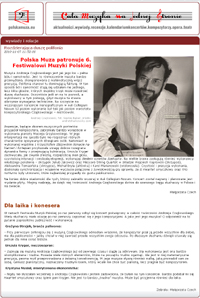
www.polskamuza.eu
review by Malgorzata Czech (in Polish)
|
Sonata
for Clarinet and Piano (1959) - Opus 1
This
webpage provides information about the André Tchaikowsky Sonata
for Clarinet and Piano - Opus 1. Scroll down to learn more about this
composition and for several performances, including the world premiere
performance with André Tchaikowsky, piano, and Gervase DePeyer,
clarinet.
(2017)
Sonata for Clarinet and Piano in Concert
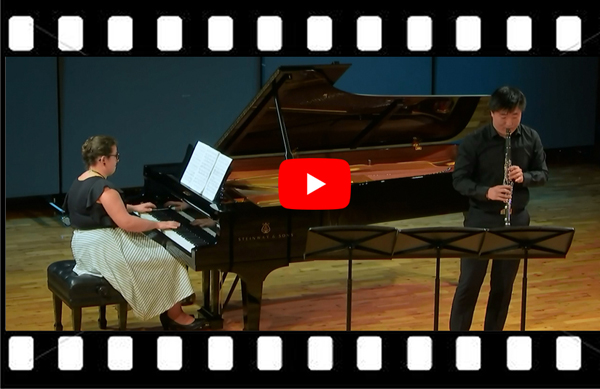
This video performance is from a PhD recital by Polish pianist, and
champion of André Tchaikowsky music, Gabriela Glapska. The clarinetist
is Harim Oh. The venue is the recital hall at the New Zealand School
of Music, Victoria University, Wellington, NZ, and was recorded on May
5, 2017.
Gabriela
Glapska (piano) - Gabriela Glapska was born in Poland and began
her piano studies at the age of seven. In 2006 she began her higher
musical education under the tutelage of Professor Ewa Poblocka in Feliks
Nowowiejski Academy of Music in Bydgoszcz where she graduated with the
highest distinction receiving her Master’s Degree in 2011. Also,
in 2011 she was selected in an academy internal competition to perform
a concerto with an orchestra in the Bydgoszcz Philharmonic Hall and
she gave a debut in the Pomeranian Philharmonic playing Andrzej Panufnik’s
Piano Concerto. During her studies, she participated in many competitions
both for solo and chamber musicians and she won many prizes. She also
participated in many international music festivals and master classes
conducted by prominent professors such as: Andrzej Jasinski, Ekaterina
Popowa-Zydron, Aleksey Orlovetsky, Mikchail Voskresensky, Kevin Kenner,
Andrzej Tatarski, Maciej Grzybowski, Monika Sikorska-Wojtacha, Martin
Hughes, Waldemar Wojtal, Tomoko Mack. After graduating from the University,
she worked as an accompanist in Bydgoszcz Academy of Music. Gabriela
is currently pursuing the PhD degree in piano performance from Victoria
University of Wellington. She has performed in Poland, Germany, Slovakia,
Belarus and New Zealand.
Harim
Oh (clarinet) - Harim Oh began his piano studies at the age of 5
and clarinet studies at the age of 7. Concentrating on the clarinet
in Auckland, NZ, his studies were complicated by a move to Alexandra,
where no suitable clarinet teacher was available. This resulted in monthly
trips to Dunedin for lessons and, later, lessons via Skype. Then, in
2013, Oh, at age 16, received a discretionary entrance to Victoria University
alongside a New Zealand School of Music scholarship and headed to Wellington
to study, before completing high school. At the age of 18, Oh won the
New Zealand National Young Performer of the Year Award and was a semifinalist
at the Gisborne International Music Competition, where he was awarded
the Prof Jack Richards Woodwind Player Award. With 2017 being the last
year for Oh at Victoria University, his future plans include possible
studies at the Paris Conservatoire in France and the Kungliga Musikhögskolan
in Sweden. Although Oh has inspiration within classical music, his top
three favourite bands are strictly rock: AC/DC, the Red Hot Chili Peppers
and Metallica.
(2015)
Sonata for Clarinet and Piano in Concert
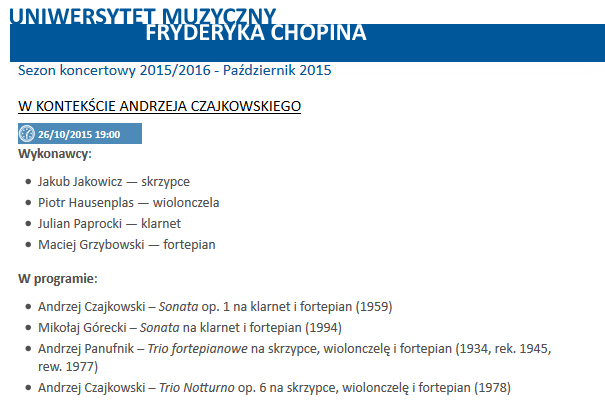
The
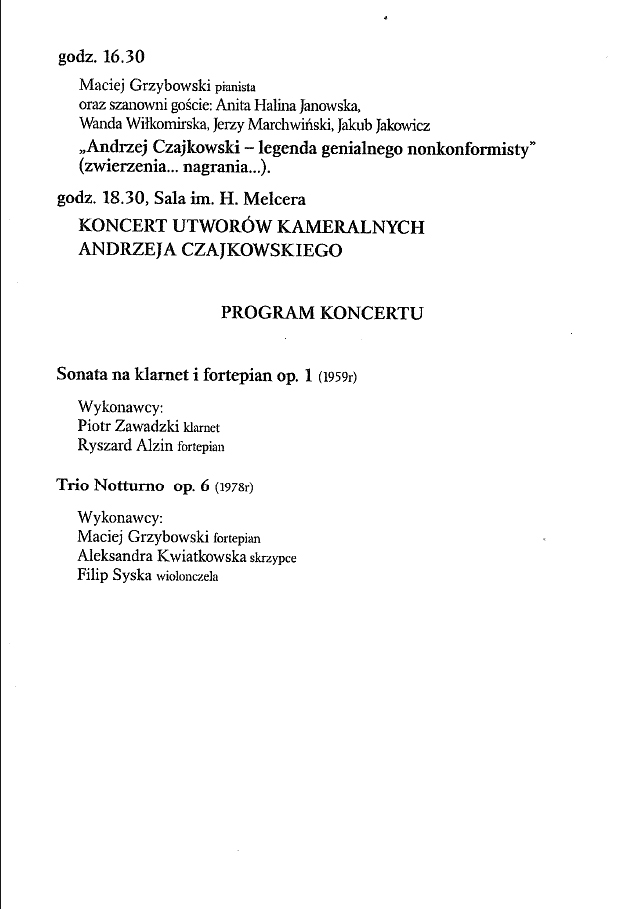
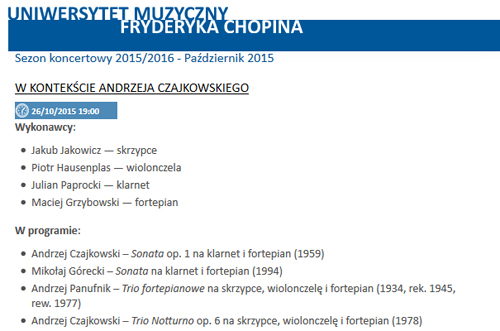
Uniwersytet Muzyczny Fryderyka Chopina in Warsaw presented a concert
on October 26, 2015 that featured the Andrzej Czajkowski composition,
Sonata for Clarinet and Piano. The performers were pianist Maciej
Grzybowski and clarinetist Julian
Paprocki. Click Here for
the program.
(2014)
Sonata for Clarinet and Piano in Concert
From a performance by the Qaartsiluni Ensemble of May 5, 2014.
|
Qaartsiluni
Ensemble Concert
BORBÉLY
László | piano
ROZMÁN Lajos | clarinet
PETO Anna Ildikó | Staging, lights, titles
SEBOK György | Video
May
5, 2014
Trafó House of Contemporary Arts
Budapest, Hungary
Click
Here or image for YouTube Link
|
|
(2014)
Sonata for Clarinet and Piano in Performance
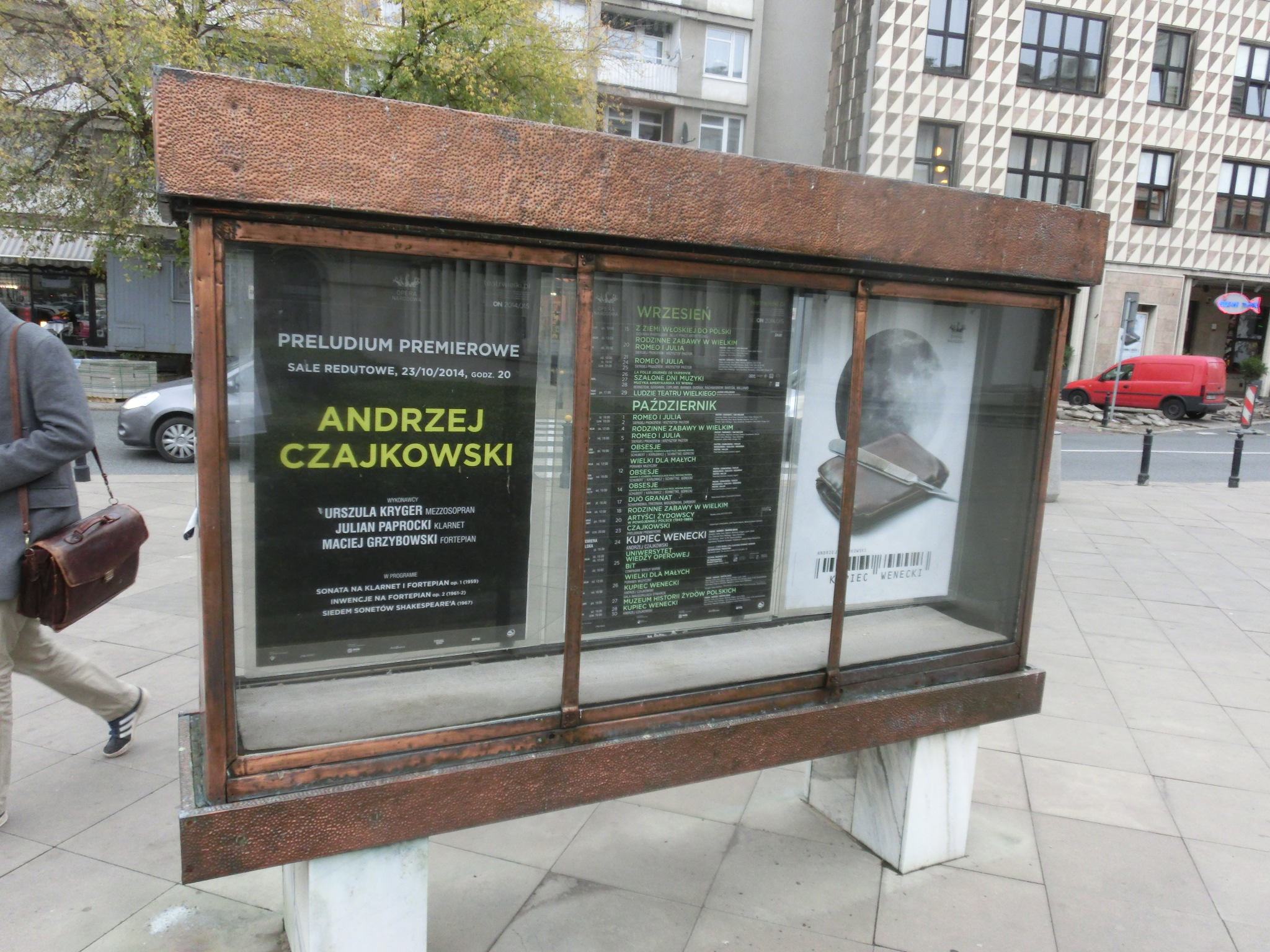
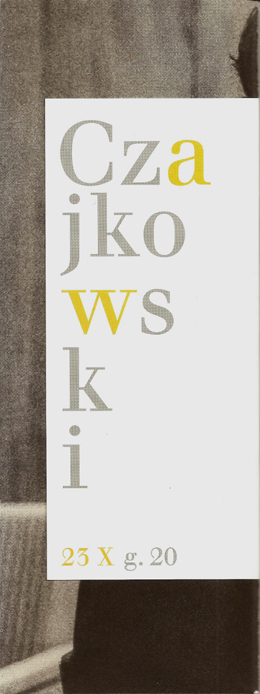
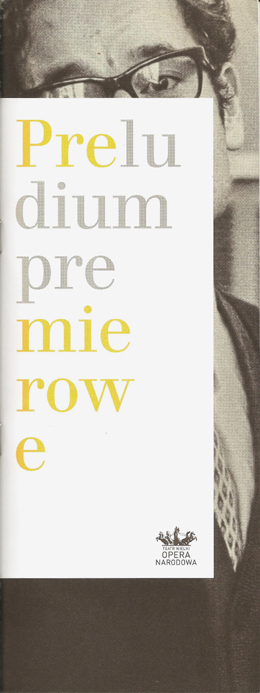
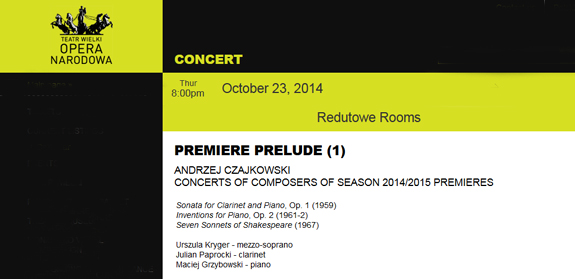
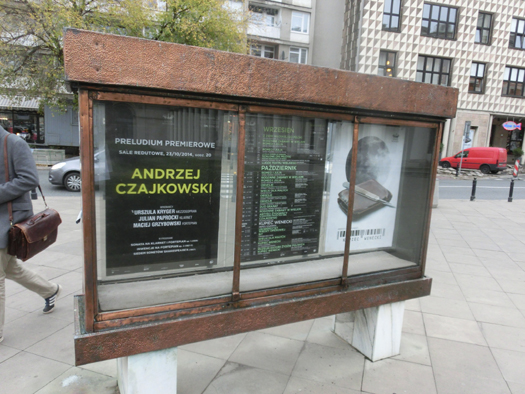
A performance of the The Sonata for Clarinet took place on October 23,
2014 at the Teatr Wielki - Polish National Opera in Warsaw, Poland.
This is first in the 2014-2015 series of concerts called "Concerts
of Composers - Premieres." Click
Here to learn more about the concert from the Teatr Wielki website.
The performers were pianist Maciej Grzybowski (website)
and Julian Paprocki (website)
clarinet.
Click
Here for a PDF of the concert (24 pages).
Concert Program Back
|
Concert Program Front
|
(2014)
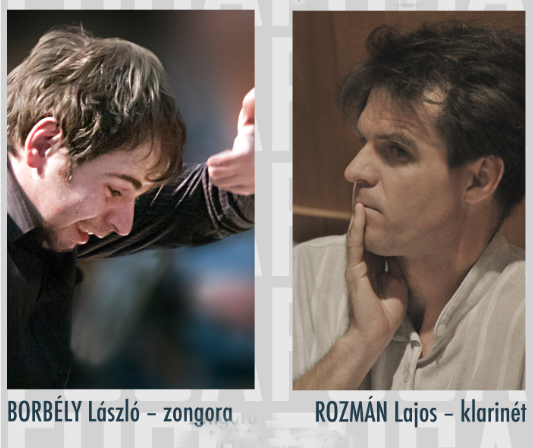
Lajos Rozmán and László Borbély - Experimental
Gladiators
Members of the Qaartsiluni
Ensemble performed the Sonata for Clarinet and Piano in concert
on May 5, 2014 at the Trafó Theatre Hall (Budapest, Hungary).
The featured musicians were Lajos Rozmán clarinet and László
Borbély piano.
|
Qaartsiluni
Ensemble Concert
BORBÉLY
László | piano
ROZMÁN Lajos | clarinet
PETO Anna Ildikó | Staging, lights, titles
SEBOK György | Video
May
5, 2014
Trafó House of Contemporary Arts
Budapest, Hungary
Click
Here or image for YouTube Link
|
|
|
|
Conductor/Clarinetist
Lajos Rozmán graduated from the Budapest Academy
of Music in 1994, with additional studies at the Conservatoire
de Musique in Geneva. Rozmán also conducts and performs
at the Arcus Temporum Music Festival where he currently holds
the position of festival musical advisor. Click
Here for a festival YouTube.
Pianist
László Borbély received his Doctorate
from the Liszt Academy (2014) and has been praised for his "great
virtuosity." One review included: "Borbely's execution
of Ligeti's Sixth Etude was stunning ...and... his rendition
of Bela Bartok's seldom-performed Sonata (1926) was absolutely
amazing, memorable and moving."
|
|
|
|
|
|
Concert
photographs (Photos: Anna Ildikó Peto)
|
Use the
player below to hear this performance. (No player? Update your browser.)
(2014)
"Chamber Music with Piano" Conference
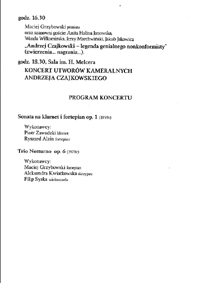
A featured work performed at the "Chamber Music with Piano"
conference on April 6, 2014, was the Sonata for Clarinet and Piano.
The performers were Ryszard Alzin piano and Piotr Zawadzki clarinet.
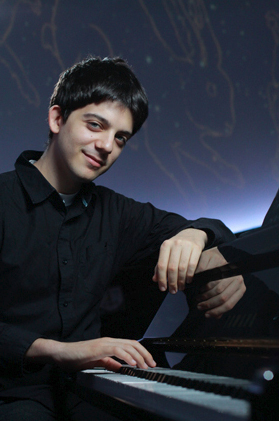
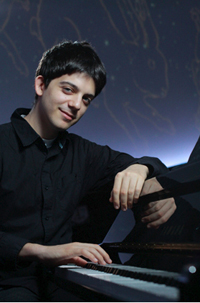
Alzin Ryszard
(piano) was born on October 21, 1991 in Warsaw and began piano studies
at the age of 7 with Prof. Hanna Sawicka. At the age of 16, he was a
prize winner in piano competitions in and around Poland, including first
prize winner of the Szymanowski Piano Competition in Warsaw. Ryszard
is particularity well known as the pianist for the "Starry Night
Concerts," which take place at The Heavens of Copernicus Planetarium
of Copernicus Science Centre (Warsaw).
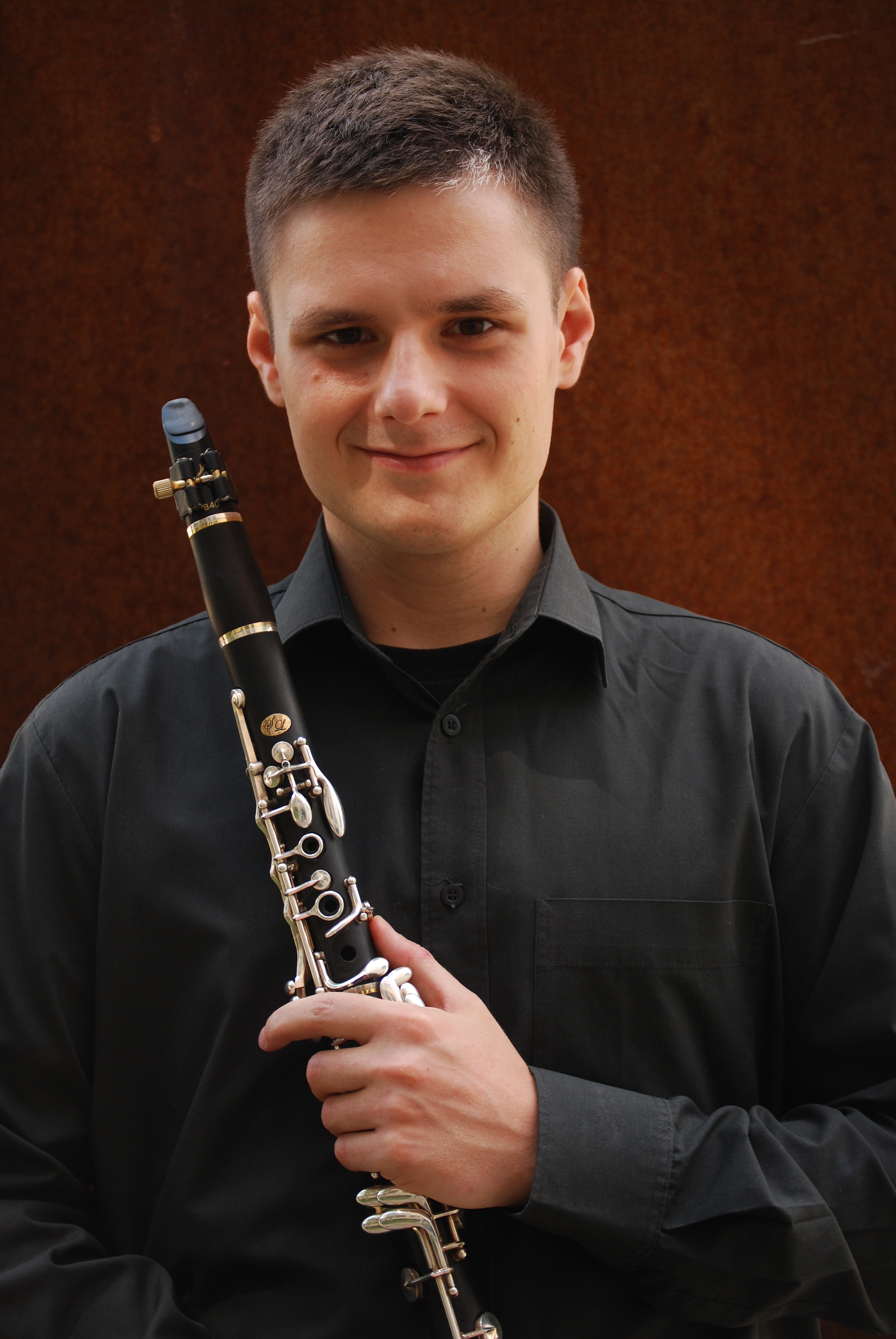
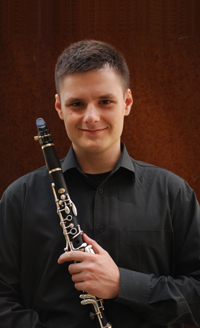
Piotr Zawadzki
(clarinet), born in 1988 in Warsaw, began his clarinet education with
Jerzy Czyran at the age of 10. In 2011 he graduated with honours from
the Fryderyk Chopin University of Music in Warsaw and spent the following
2 years (2011-13) studying under the direction of Michel Lethiec at
the Conservatoire National à Rayonnement Régional de Nice,
France. A prize winner in several competitions, Zawadzki is especially
interested in contemporary repertoire and techniques.
Program
|
Ryszard Alzin
|
Piotr Zawadzki
|
(2013)
Leeds Symposium and Concert
André's biographer, Dr. Anastasia Belina-Johnson, who is also
a Head of Classical Music department at Leeds College of Music and a
member of LUCOS (Leeds University Centre for Opera Studies), organized
a concert on André Tchaikowsky's birthday (November 1st, 2013)
dedicated to his compositions (he would have been 78 years old). Featured
was Sonata for Clarinet and Piano (1959) played by pianist Nico
de Villiers and clarinetist Janet Hilton.
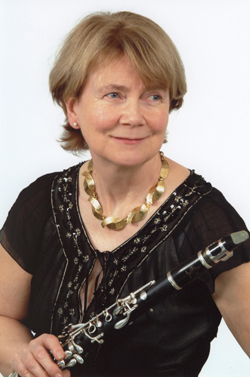
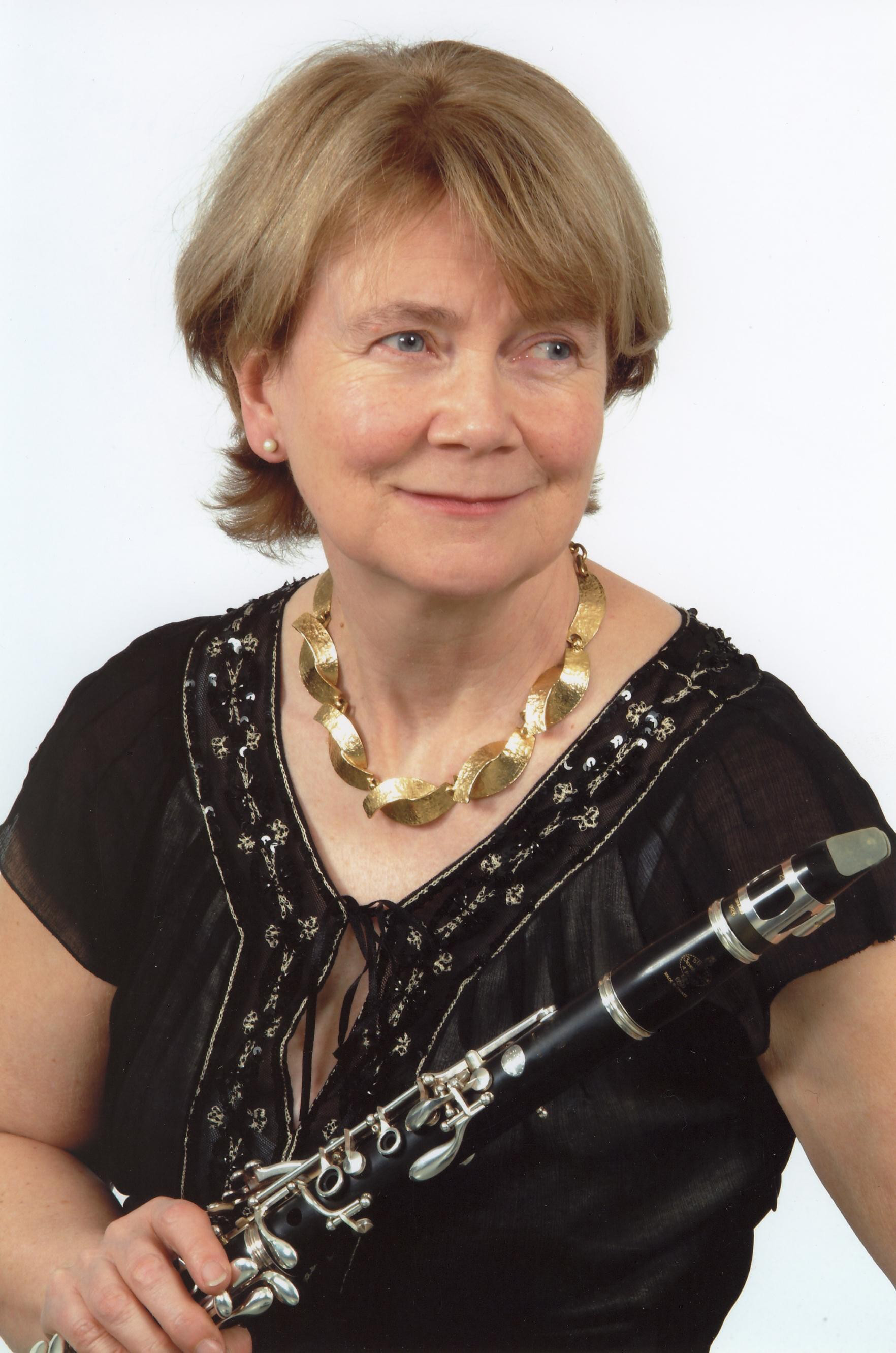
Janet
Hilton - November 2013
|
Played
both Arioso e Fuga per Clarinetteo Solo and Clarinet
Sonata Opus 1 (with pianist Nico de Villiers) in concert on
November 1, 2013. Learn
More about the concert.
Learn More (pdf file)
or Learn
More (Blog) with this interview between pianist Nico de Villiers
and Janet Hilton.
Click
Here (pdf) to read Nico de Villers' comments on André
Tchaikowsky.
|
(2013)
Warsaw Concert at Wilanów Palace
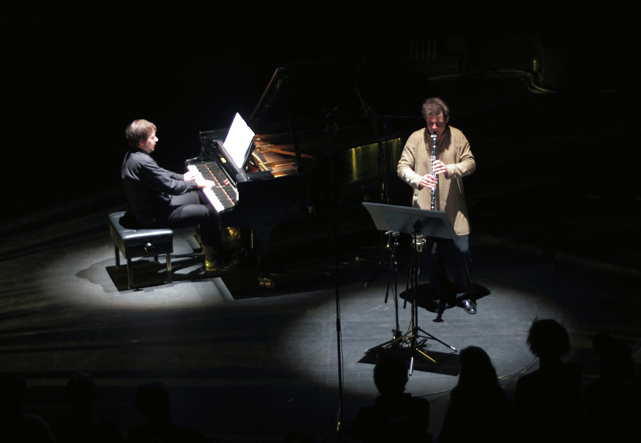
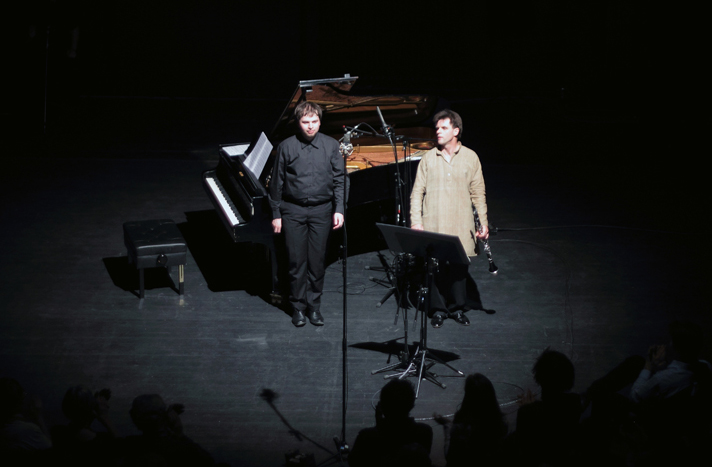
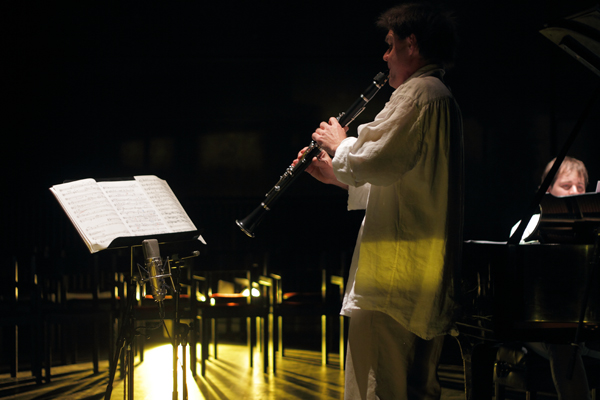
The Sonata for Clarinet and Piano was presented in concert with Maciej
Grzybowski piano and Julian Paprocki clarinet. The music from this concert
appears on the this webpage (below). The Polish clarinet virtuoso, Julian
Paprocki (born 1993), has already blazed an extraordinary career for
such a young age. Performing both classic and contemporary works, Julian
finds André Tchaikowsky's Clarinet Sonata of particular interest
and has kindly provided the following comments about his sonata performance.
Interestingly, his clarinet teacher was Krzysztof Zbijowski, whose performance
of the Sonata also appears on this webpage (below).
|
|
"My
first performance was like some kind of magic door opening, and
now, over time, I'm understanding more and more. Under the layers
of logic, intellect, inspiration, potential and freshness, there
is an enormous abundance of ideas. The form of the work is interesting,
generally in one movement but with a multitude of developments.
It's amazing and there aren't so many compositions out there where
your can change the interpretation based on your emotions, and
it never comes out boring. Do I like this masterpiece? Yes! To
me it's one of the most interesting pieces in the 20th century
clarinet literature." |
(2010)
2010 Celebration Performances
In celebration of the 75th Anniversary of the birth of André
Tchaikowsky (Andrzej Czajkowski) (November 1st, 1935), two sonata performances
were given in October 27, 2010 (Warsaw) and November 6, 2010 (Krakow)
by Krzysztof Zbijowski (Clarinet) and Maciej
Grzybowski (Piano).
Of the
November 6, 2010 concert, Malgorzata Czech wrote for www.polskamuza.eu:
Andrzej
Czajkowski music was his fate - full of pain and loneliness. It is
also music very well throughout and composed with mathematical precision.
Polyphony is a dominant texture of this music of pain and loneliness,
which could tear apart the soul of the listener, plus it put enormous
technical requirements on the performers. Yesterdays monographic concert
at the Jagiellonian University’s Collegium Novum brought a level
of performance equal to the level of Andrzej Czajkowski's composing
skills - Masterful.
Pianist
Maciej Grzybowski, in collaboration with clarinetist Krzysztof Zbijowski,
played the Sonata for clarinet, capturing perfectly the dynamics of
the sonata form in this performance.
(1966)
Sonata for Clarinet and Piano, Opus 1, World Premiere Performance
In
this recording, André Tchaikowsky plays the piano and Gervase
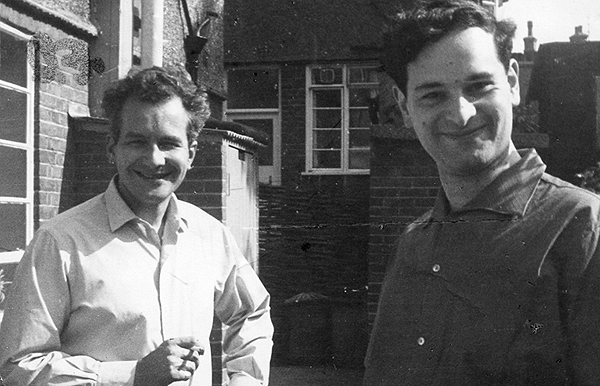
DePeyer is on clarinet. Below, Gervase DePeyer (left) and André
Tchaikowsky (right) in 1964 (Photo Credit, Judy Arnold Photographic
Archive). Click images below for a larger view.
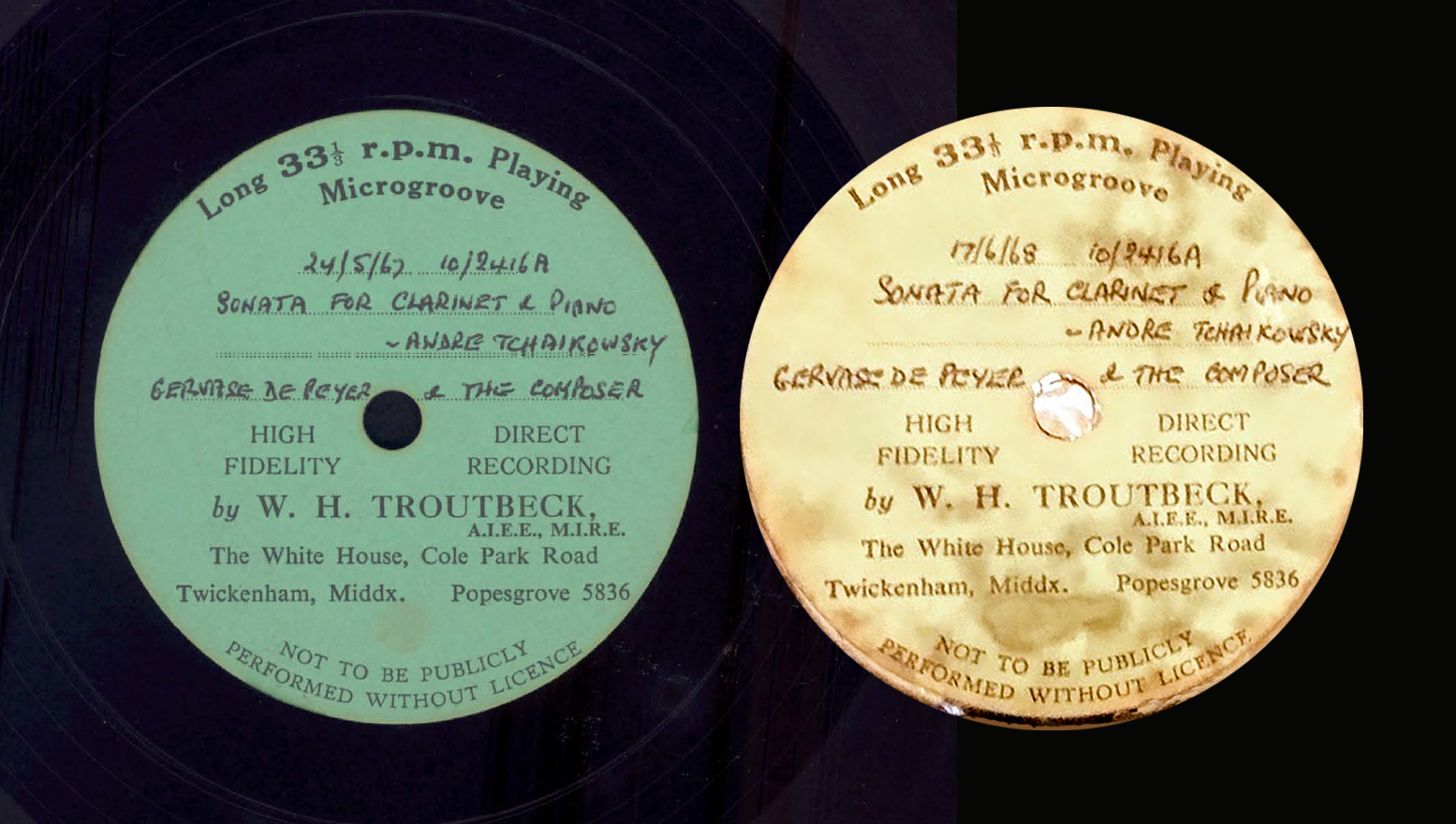
This performance
was recorded off a BBC3 radio broadcast by W.
H. Troutbeck, who made a master shellac recording and then used the
master to press a number of LP vinyl copies.
Mr. Troutbeck made two sets of copies from the original shellac recording.
On the image below, left, was a label from the May 24, 1967 pressing;
right, was a label from the June 17, 1968 pressing.
These
label images were sent to me by, left, Carsten Schmidt, who found the
recording
in a Munich, Germany flea market,
and, right, Paul Fris, who found the recording in the attic of a colleague,
in Amsterdam, Netherlands. I am very grateful to Carsten and Paul for
taking the time to share these images. The recordings themselves are
in the Andrzej Czajkowski Archive in Warsaw Poland (left) and in the
Andrzej Czajkowski Archive in USA (right).
Click
Here
for an mp3 file of this performance.
Music/MP3
While there are no professional recordings available for the Sonata
for Clarinet and Piano, Opus 1, several recordings are available, including
the following four recordings: André Tchaikowsky (piano) and
Janet Hilton (clarinet); Carol Archer (piano) and Gervase DePeyer (clarinet);
Maciej Grzybowski (piano) and Krzysztof Zbijowski (clarinet), and then
Maciej Grzybowski (piano) and Julian Paprocki (clarinet). The work is
in a single movement in sonata form with a free recapitulation.
1. André
Tchaikowsky, Piano - Janet Hilton, Clarinet (1973)
00_tchaikowsky_hilton_opus_1_complete.mp3
2. Carol
Archer, Piano - Gervase DePeyer, Clarinet (1987)
(Thanks to John Pope for cleaning up this file.)
00_archer_depeyer_opus_1_complete.mp3
3. Maciej
Grzybowski, Piano - Krzysztof Zbijowski, Clarinet (2010)
00_zbijowski_grzybowski_opus_1_complete.mp3
4. Maciej
Grzybowski, Piano - Julian Paprocki, Clarinet (2013)
00_paprocki_grzybowski_opus_1_complete.mp3
Music
Publisher
This
work is
published by Josef
Weinberger and appears in their catalog of André Tchaikowsky
published works. Click Here
for a PDF copy of the André Tchaikowsky Weinberger catalog.
From the
biography The
Other Tchaikowsky
André wrote the Sonata for Clarinet and Piano, Opus I, for Michael
Riddall. In this composition the clarinet portion gives the appearance
of being more difficult than it really is. The first performance of the
clarinet sonata was given by Gervase DePeyer, clarinet, and André
Tchaikowsky, piano, on July 4, 1966, for a BBC broadcast. Both the publishing
of the Sonata and the BBC performance were at the urging of DePeyer. Judy
Arnold remembers:
"Gervase
pushed André to submit his Sonata for Clarinet and Piano to
the BBC for broadcast. In the end, it was Gervase who submitted it,
and when it was accepted, André ran away and said he didn't
want to do it, that he couldn't play the piano part. Gervase insisted,
and it was all right in the end, but only after a terrible hoo-ha."
A tape
was made of the broadcast and de Peyer sent it to music publishers,
Josef Weinberger urging them to publish the work. They agreed and, in
late 1969, it became André's first published composition. Weinberger
remained André's publisher for all of his works, except for the
"Inventions," Opus 2, which was published by Novello, but
later assigned to Weinberger.
Niall O'Loughlin,
the Musical Times music critic for newly published woodwind scores,
described the Sonata for Clarinet and Piano, Opus 1, work in March,
1970:
A Sonata
for Clarinet and Piano by the pianist André Tchaikowsky will
come as a surprise to many people. It is an unassuming, but well written
work of only moderate difficulty. Most of the musical interest is
melodic, with some debt to Bartok. There is no piano bravura, but
carefully imagined and sustained contrapuntal thinking.
Another
review for newly published scores in Musical Opinion in March,
1970:
André
Tchaikowsky's Opus 1 is now ten years old, but it carries its age
very well. It is in one movement, dominated by a single theme which,
at first, looks serially-based, but is not. It is presented in changing
patterns, both rhythmic and melodic, and is thoroughly developed in
both instruments. Performers should find it mutually rewarding.
Subsequent
performances of the Sonata for Clarinet and Piano include BBC performances
with Janet Hilton, clarinet, and Peter Frankl, piano, on June 17, 1973;
and and third BBC performance with Janet Hilton, clarinet, and André
Tchaikowsky, piano. The first live public performance didn't occur until
October 27, 1985 when it was presented at Wigmore Hall as part of the
Josef Weinberger Centenary Concert Series, with pianist Julian Jacobson
and clarinetist Anthony Lamb. Gervase DePeyer played it on January 14,
1987, at Merkin Hall in New York City, with pianist Carol Archer, and
in London, on February 12, 1987, with pianist Gwenneth Pryor.
For the
New York performance on January 14, 1987, Bernard Holland wrote in the
New York Times:
Clarinet:
Gervase DePeyer
Wednesday
night's curious collection of clarinet pieces at Merkin Concert Hall
had a common denominator - their personal associations with the featured
performer, Gervase DePeyer. Mr. DePeyer arranged the sonatas by Handel
and Schubert and has given the premieres of all the other items on
this program except one. Of
the newer pieces, André Tchaikowsky's Sonata for Clarinet and
Piano was impressive for its sustained and tightly argued contrapuntal
thinking. Carol Archer, pianist, was an excellent partner in all this
music, especially in the Tchaikowsky piece.
A musical
description of the work is provided by music publisher Josef Weinberger:
A quiet,
meditative opening explores the upper and lower reaches of both instruments'
range: this is the first subject. The second subject is a brisk and
rhythmical theme announced first by the clarinet, then taken up by
the piano. A subsidiary theme follows a short cadenza and proceeds
to develop the phraseology of the second theme, with anacrusic semi-quavers
and wide intervallic movement. With the return of the broad and expansive
first subject the development section commences; however, the accompaniment
now highlights the melody by shifting from lively static octave embellishment
to flurries of movement. The clarinet eventually joins the piano in
a frenetic exchange over pedal points on A flat, and C sharp (the
enharmonic tonic, though the work is not in any particular key). The
recapitulation is fairly free in construction and includes a short
solo section for the piano which ruminates on the first subject. The
sonata closes with the clarinet becoming less apparent amidst the
piano's singing melodies and ringing chords.
Additional
material below provided by and approved by Michael Riddall, from his
work, "My Life Story:"
I met
André Tchaikowsky who was considered to be probably the greatest
pianist of his generation by his contemporaries whom I also got
to know, such as Alfred Brendel, Fou T'song, James Galway and the
Amadeus Quartet. I became first his lover, then his protégé
at the Royal College of Music, then his personal secretary. It was
a stormy but intensely rich experience to know him, a truly exceptional
genius who not only had the proverbial ability to memorise and reproduce
at the piano whole orchestral scores after one hearing and produce
at his best performances of an incandescence that those who heard
them said they had never heard matched, but also had a wide and
deep knowledge of English, French and Russian Literature and a demonic
sense of humour and mischievousness.
He
was Polish Jew; mother gassed when he was two, hiding in cupboards
during the war, rescued by his grandmother and later living with
his aunt [Mala] in Paris, with whom I stayed for three months at
one point. I felt the need of help and intended to get therapy,
but he resisted the idea. I saw Dr. Malan at the Tavistock and he
said I seemed to be asking for permission, which remark unlocked
a door and I started (eclectic). Soon after this I persuaded André
to start much needed treatment himself, firstly with Graham Howe
[you can't unscramble eggs], and later he became a long-term "patient/friend/son"
of George Lyward of Finchden Manor until the latter's death.
|